What do you research before designing?
- Deed restrictions. The recorded restrictions for your subdivision, and any amendments.
- The plat. Building lines, easements and any notes recorded on it.
- The flood map. Whether the lot is in the 100-year or 500-year floodplain, and what elevation the new floor must reach.
- Historic status. Whether the lot is in a city historic district, which adds a Certificate of Appropriateness.
- The city. Houston, Bellaire, Pearland and Sugar Land each run their own review.
What goes into the plan set?
- A site plan showing the unit, setbacks, easements, drainage and parking.
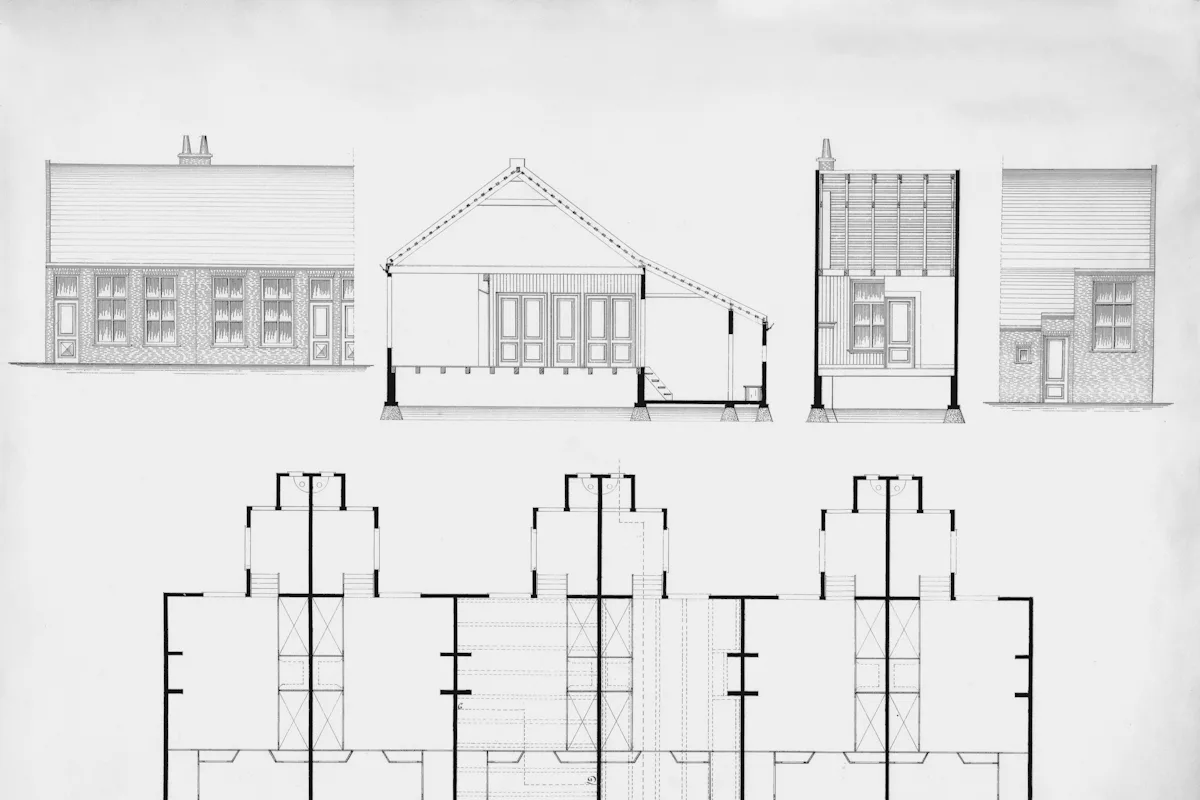
- Floor plans, elevations and sections.
- Engineered drawings for the foundation and framing.
- Energy code documentation and equipment sizing.
- Flood elevation information where the lot is mapped in a floodplain.

What extra approvals can a Houston ADU need?
In a city historic district, new construction needs a Certificate of Appropriateness from the Houston Archaeological & Historical Commission, reviewed against the district's design guidelines. In Pearland, as of October 2026, an ADU needs a conditional use permit approved by City Council. Those steps add time, so we build them into the schedule from day one.
Do I need an HOA approval as well?
Often. Many master-planned neighborhoods require architectural review before any exterior building. That approval is separate from the city permit, and the HOA can say no even when the city says yes.
How long does design and permitting take?
It depends on what the research turns up. A simple cottage on an unrestricted, dry lot moves quickly. A lot that needs a historic hearing, a council vote or a deed restriction question answered by an attorney can take months longer. We give you a schedule specific to your lot with the quote.
Related
As of October 2026. Sources: City of Houston Planning & Development; Houston Archaeological & Historical Commission staff reports; Houston Chapter 19 floodplain ordinance; Community Impact (Pearland, May 2026).
Check what your lot allows
The research step is where we start. Send your address.